The world’s largest home improvement retailer has just reported a pattern that many UK brands will recognise, people are still spending on their homes, but they’re making fewer trips to do it.
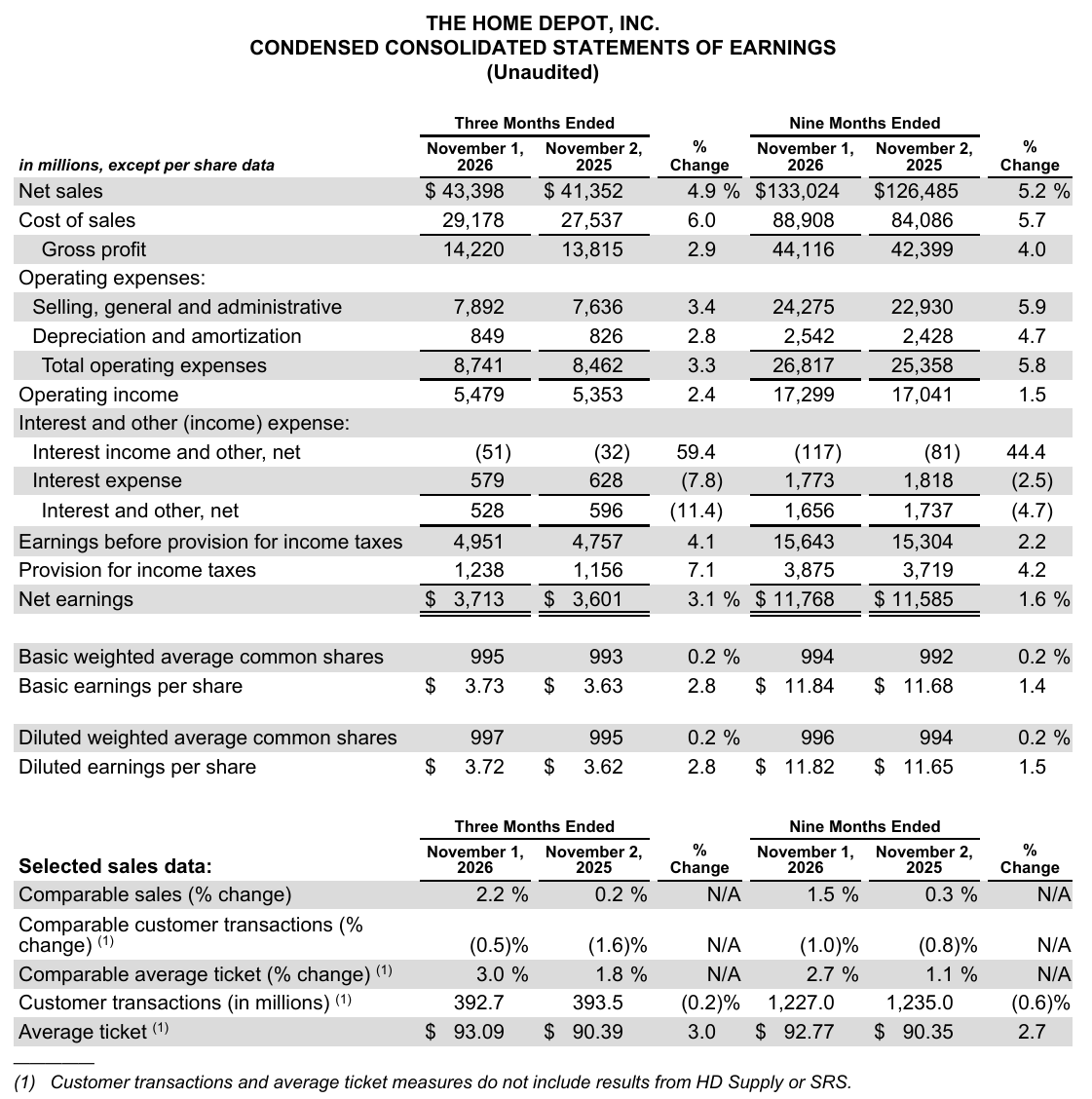
The Home Depot’s third-quarter results, covering the three months to 1st November, show sales up 4.9% to $43.4 billion. Like-for-like sales rose 2.2%, a clear step up from 0.2% a year ago. Underneath that, transactions fell 0.5% while average spend per transaction rose 3.0% to $93.09; this is a pattern that has held all year.
Home Depot doesn’t trade in the UK, but its scale makes it a useful barometer for home improvement demand, and a relevant read for members who export or compete with brands active across the Atlantic.
Selling more, keeping a little less
Profit grew, but not as fast as sales. Net earnings rose 3.1% to $3.7 billion, while gross profit was up 2.9% against that 4.9% sales increase. Operating margin slipped from 12.9% to 12.6%. Home Depot doesn’t explain why in the release, but by our reckoning gross margin was roughly 32.8%, down from around 33.4% last year.
Stock and stores
Stock is moving in step with trade. Inventories ended the quarter at $27.6 billion, up 5.3% year on year and broadly matching sales growth. Acquisitions muddy the comparison a little, the group spent $1.8 billion buying businesses in the first nine months and names SRS and GMS among its acquired companies.
The business now runs 2,372 stores and more than 1,320 SRS locations across the US, Canada and Mexico, with around 15 new stores planned this year.
What Home Depot expects
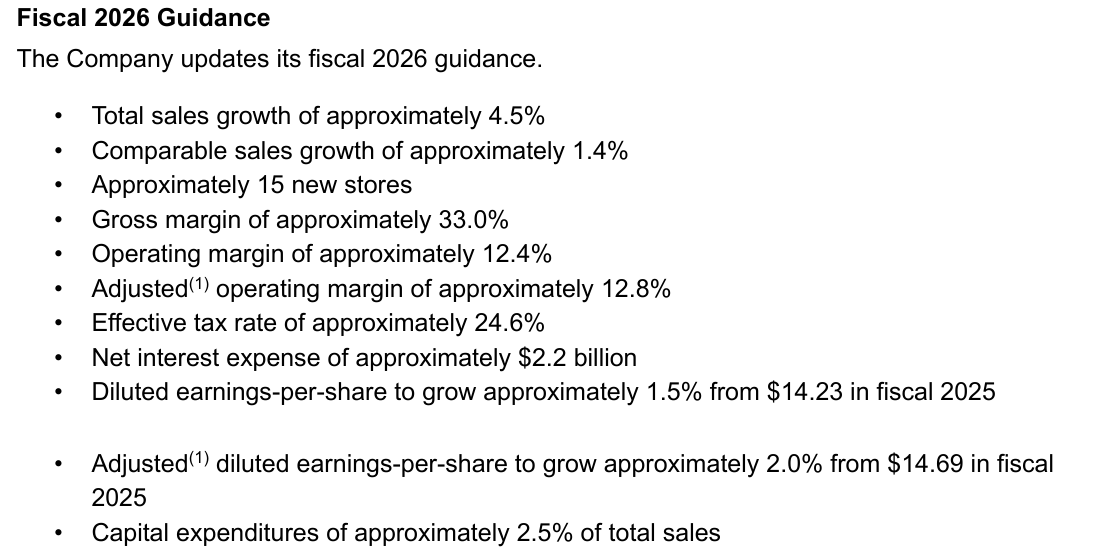
Incoming chief executive Richard McPhail said the quarter “exceeded our expectations”. Updated full-year guidance points to total sales growth of about 4.5%, like-for-like growth of about 1.4% and gross margin of about 33.0%. The like-for-like growth is at 1.5% for the year so far, that suggests a steady rather than spectacular final quarter.
What does this tell UK suppliers?
• Spending is holding up, but it’s value-led. Shoppers are visiting less often and spending more when they do – worth comparing with what you’re seeing from UK customers.
• Margin is the pressure point. When profit grows more slowly than sales, conversations about cost and range performance usually aren’t far behind.
• Stock looks healthy. Inventory rising in line with sales points to steady ordering rather than a squeeze into the year end.
• No big swing expected. Guidance suggests the final quarter will look much like the rest of the year.