BHETA is working directly with Government to ensure that measures designed to tackle knife crime are effective, evidence-based and proportionate – while protecting the legitimate manufacture, sale and use of kitchen knives, cutlery and other everyday bladed products.
BHETA fully supports Government's objective of reducing knife crime and preventing knives being sold illegally to under-18s.
Our role is to make sure that new rules target the areas of genuine risk without creating unnecessary restrictions, costs and complexity for responsible manufacturers, suppliers and retailers.
In July 2025, BHETA took this case directly to Government at a Ministerial round table at the Home Office.
Since then, BHETA has continued to represent knife suppliers as Government has developed new legislation and considered further regulation of the sale and importation of knives.
Taking knife suppliers' concerns directly to Government
On 16 July 2025, BHETA attended a round-table meeting at the Home Office with five BHETA member companies, major retailers and the then Minister of State for Policing and Crime Prevention, Rt Hon Dame Diana Johnson DBE MP.
The meeting considered the role manufacturers, suppliers and retailers could play in encouraging consumers to consider round-tipped kitchen knives alongside traditional pointed-tip products.
BHETA's position was clear.
- We support innovation and giving consumers greater choice, including the development and promotion of effective round-tipped products.
- However, BHETA also supports the continued legitimate sale of conventional pointed kitchen knives. These are everyday culinary tools used safely by millions of consumers and professional cooks.
- The answer to knife crime should therefore be targeted intervention against illegal and irresponsible activity rather than unnecessary restrictions on legitimate products and businesses.
Important reassurance for kitchen knife suppliers
One of the most significant outcomes of the Ministerial meeting was confirmation from the Home Office that it had no plans to introduce further legal restrictions on ordinary pointed-tip kitchen knives.
This was important reassurance for BHETA members at a time of considerable uncertainty about the future direction of knife legislation.
Government also committed to working collaboratively with retailers, manufacturers and suppliers as its approach developed.
BHETA welcomed this recognition that effective policy needs input from the legitimate businesses that understand how knives are designed, manufactured, sold and delivered.
Government agrees to review the cutlery issue
BHETA also used the Ministerial round table to reinforce its long-standing campaign concerning ordinary round-ended cutlery knives. BHETA believes it is disproportionate for normal table knives to be captured by age-verification requirements intended to restrict young people's access to potentially dangerous knives. The Minister committed to review the issue.
This built on several years of representations by BHETA to the Home Office and is being pursued through BHETA's separate campaign to secure an exemption for ordinary cutlery knives.
While the full exemption BHETA is seeking has not yet been achieved, there has subsequently been some recognition within new legislation that low-risk cutlery should be treated differently from other knives.
BHETA helps shape the wider knife-policy debate
The July round table was not an isolated meeting. BHETA has continued to engage with Government, policing, retailers and other stakeholders as knife policy has developed.
In November 2025, BHETA participated in the Reducing Knife Harm Conference, where BHETA and member representatives joined Government, policing and knife-crime experts to consider how manufacturers and retailers could contribute to reducing knife harm. The discussion enabled the legitimate knife industry to demonstrate that suppliers want to be part of the solution. BHETA's approach has consistently been to support responsible retailing while making the case for regulation based on evidence and actual risk.
New knife-sales licensing proposals
In December 2025, the Home Office launched another major consultation proposing a mandatory licensing system for businesses and individuals selling or importing knives and other bladed articles. The proposals potentially affect a very wide range of legitimate products and businesses, from kitchen knives and cutlery to garden, DIY, craft and trade tools.
BHETA immediately engaged with the process.
In February 2026, BHETA arranged a dedicated meeting giving members and retailers direct access to Home Office officials to discuss the proposals and their practical implications.
BHETA also urged affected businesses to respond individually to the Government consultation, helping ensure that policymakers received real commercial evidence from the companies that would have to operate under any future licensing regime.
BHETA's message to Government has been that any system must be proportionate, practical and focused on risk. Legitimate, responsible suppliers should not face unnecessary cost and administration because of illegal activity taking place elsewhere in the market.
Progress within the Crime and Policing Act
The Crime and Policing Act 2026 introduced substantial changes to the rules governing knife sales, including stronger age and identity verification for remote sales and delivery and a new requirement to report certain bulk purchases of knives. BHETA welcomes the fact that the legislation recognises that not all bladed products present the same level of risk.
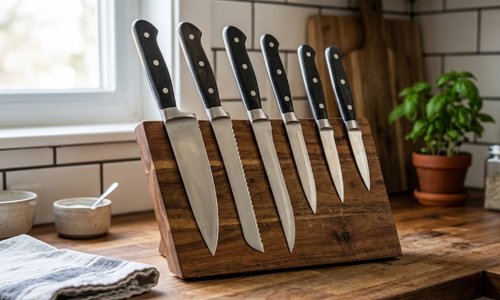
In particular, ordinary cutlery knives – other than sharply pointed steak knives – have been excluded from the new bulk-sale reporting requirement. Qualifying kitchen-knife sets, such as conventional knife blocks containing differently sized or shaped knives, are also treated differently so that purchasing a normal kitchen-knife set does not automatically trigger a bulk-sale report. These are sensible distinctions and reflect the risk-based approach BHETA has consistently advocated.
Campaign progress
✓ Government confirmed that it was not planning a ban or further product restrictions on ordinary pointed-tip kitchen knives
✓ The Minister agreed to review BHETA's concerns about ordinary cutlery knives
✓ BHETA secured direct dialogue between knife suppliers, retailers and Home Office policymakers
✓ Ordinary cutlery knives have been exempted from the new bulk-sale reporting requirements
✓ Conventional qualifying kitchen-knife sets have also been protected from inappropriate bulk-sale reporting
✓ BHETA members have had direct opportunities to influence the Government's proposed knife-sales licensing regime
The wider regulatory environment is nevertheless continuing to change, so BHETA's campaign remains active.
Supporting tougher action where it is needed
BHETA does not oppose stronger action against irresponsible sellers or illegal knife sales. Government has identified particular concerns around underage sales, anonymous or unregulated sellers, social-media activity and failures in online age verification. BHETA supports effective action in these areas. Responsible businesses which already invest in age verification, staff training, compliant delivery arrangements and responsible retailing should not be undermined by sellers that evade those requirements. This is another reason BHETA believes policy needs to distinguish between responsible mainstream suppliers and the channels presenting the greatest risk.
The next challenge: knife-sales licensing
The Government's consultation on introducing a licensing regime for knife sellers and importers closed in February 2026. As of September 2026, the Government's final response has not yet been published. This could represent one of the most significant changes to the regulation of legitimate knife sales for many years. Depending on its eventual scope, a licensing system could affect manufacturers, importers, wholesalers, retailers and potentially many businesses selling everyday products incorporating blades. BHETA has therefore argued that Government must carefully consider proportionality, product scope, costs and implementation. Any import-licensing system must also avoid creating loopholes which allow products to enter the UK through less regulated channels while placing additional obligations on established, responsible businesses. BHETA will continue engaging with the Home Office as Government decides how to proceed.
A long-standing commitment to responsible knife retailing
BHETA's involvement in responsible knife retailing predates the current legislative programme. Over many years, the association has brought together major knife suppliers and retailers, worked with Government and Trading Standards and helped businesses implement responsible sales practices. BHETA previously helped extend the Challenge 25 approach to bladed products and provided industry collateral to help suppliers, retailers and delivery businesses comply with age-restricted sales requirements. This experience means BHETA can bring both a supplier perspective and practical knowledge of how regulations operate in the real world when Government considers further changes.
Protecting consumers and legitimate businesses
Knife crime is an exceptionally serious issue and responsible industry has an important part to play in tackling it. But good regulation must also be targeted. Kitchen knives, table cutlery, gardening equipment and trade tools are essential everyday products used safely by millions of people. BHETA's role is to ensure policymakers understand that distinction. We will continue to support effective measures against illegal and irresponsible knife sales while challenging proposals that impose disproportionate costs or restrictions on legitimate suppliers without clear evidence that they will reduce knife crime. That balance is at the heart of BHETA's campaign.
Does your business manufacture, import, distribute or sell knives or other bladed products?
BHETA wants to hear from members about the practical impact of new and proposed knife legislation. Evidence from suppliers helps us make a stronger case to Government and ensures that future regulation reflects how the legitimate industry actually operates.